
What is Indus Waters Treaty? Crucial facts, Impacts and Its 2025 Turning Point.

🌟 Historical Background
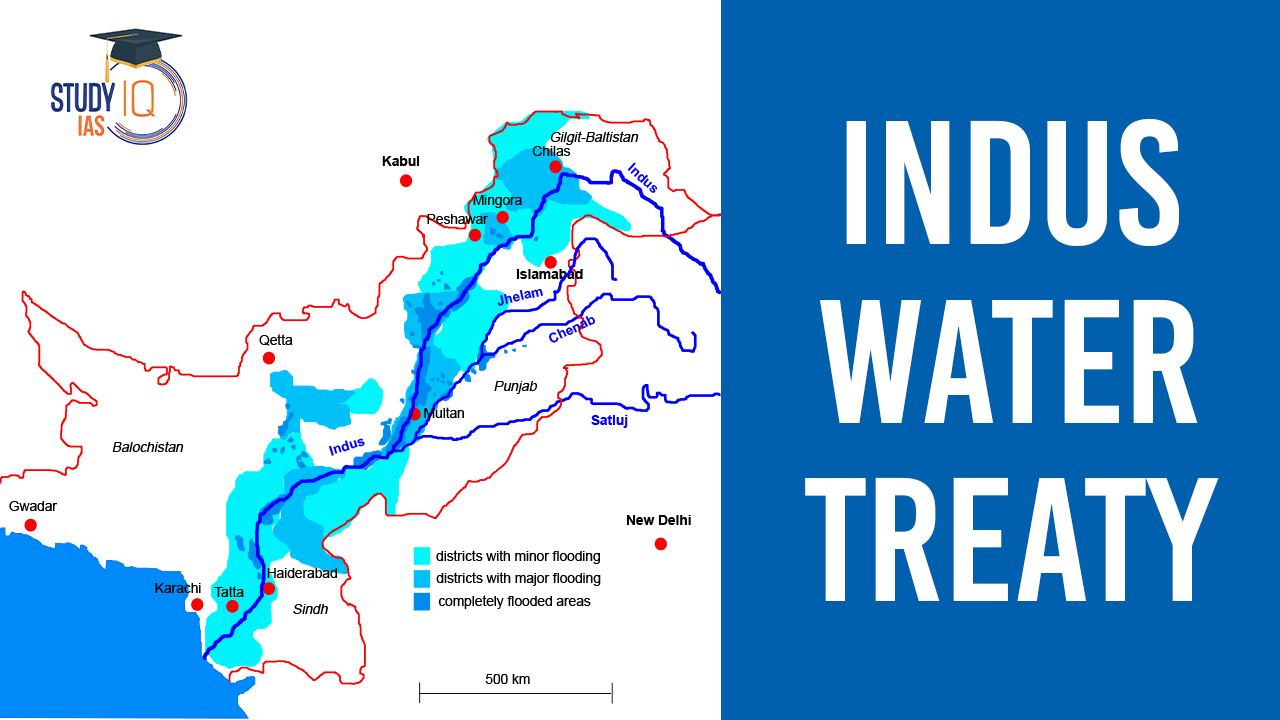
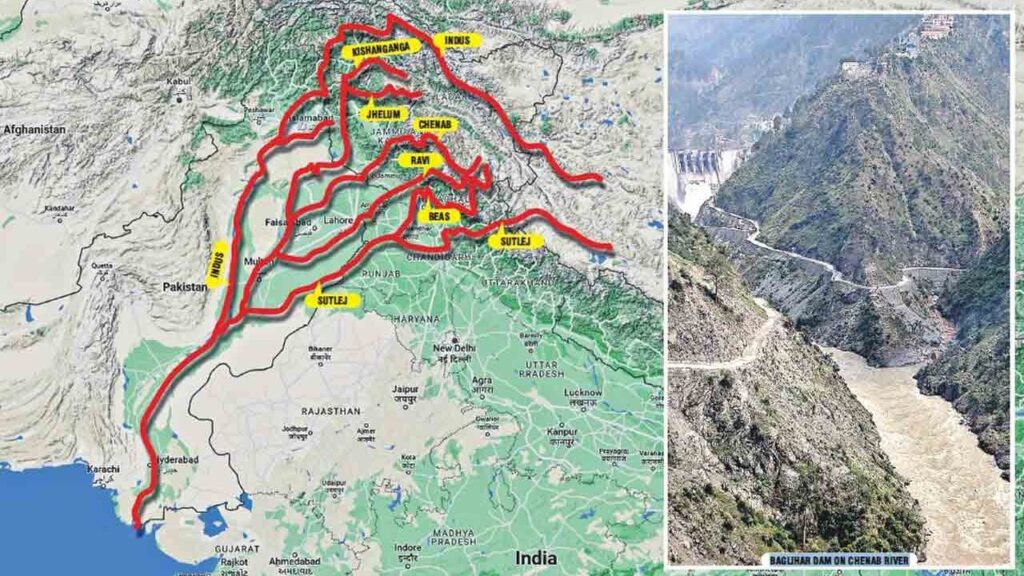
Negotiations began soon after the 1947 Partition, when the headwaters of the Indus system fell largely in India but its flow served the plains of Pakistan. Brokered by the World Bank, the treaty was signed in Karachi on September 19, 1960, by Indian Prime Minister Jawaharlal Nehru and Pakistani President Ayub Khan. It was designed “in a spirit of goodwill and friendship” to fix and delimit rights and obligations over six rivers: Indus, Jhelum, Chenab, Ravi, Beas, and Sutlej.
📜 Key Provisions
- River Allocation
- Eastern Rivers (Ravi, Beas, Sutlej) go to India.
- Western Rivers (Indus, Jhelum, Chenab) go to Pakistan.
- Non-Consumptive Uses – India may use western rivers for run-of-the-river hydroelectric projects, irrigation canals, and limited storage, subject to strict design parameters to safeguard flow into Pakistan.
- Permanent Indus Commission (PIC) – A bilateral body with one Commissioner from each country meets regularly to exchange data, oversee implementation, and address technical queries.
- Dispute Resolution – Technical issues go to a Neutral Expert; serious breaches can be escalated to a Court of Arbitration.
📈 Impacts Over Six Decades
- Endurance Amid Conflict: The IWT has survived three wars (1965, 1971, 1999) and countless crises, largely due to its clear rules and the PIC’s dialogue mechanism
- Agricultural Lifeline: Over 90% of Pakistan’s irrigated agriculture relies on the Indus system, making uninterrupted flow vital for food security.
- Hydropower Growth: India’s run-of-the-river projects—Baglihar on Chenab and Kishanganga on Jhelum—have increased power supply but triggered Pakistan’s objections over design, leading to arbitration under treaty mechanism.
🌍 Modern Challenges and Calls for Reform
Climate Change
Rapid glacial melt in the Himalayas and shifting monsoon patterns are altering river flows, yet the IWT lacks comprehensive provisions to manage changing water availability and extreme events.
Population & Development Pressures
Rising populations and growing energy demands have spurred India to formally request a review and modification of the treaty—citing the need for larger storage capacity and flexible allocation to support clean energy projects (e.g., pumped storage).
⚠️ Current Situation (April 2025)
On April 23, 2025, a militant attack near Pahalgam in Jammu & Kashmir killed 26 tourists and injured 17. India accused Pakistan-based groups of cross-border terrorism and, in a first-ever move, suspended its participation in the IWT, downgraded diplomatic ties, expelled Pakistani advisers, and closed the Attari–Wagah border crossing.
Pakistan condemned the action as “water warfare,” warning that disruption of western river flows would devastate its Punjab and Sindh agricultural heartlands. Pakistani leaders have called for renewed international mediation, while Indian officials insist the treaty will remain “in abeyance” until Pakistan irreversibly dismantles terror infrastructure.
🔮 Regional & Global Implications
- Water Security Risks: Even short-term suspension threatens irrigation for over 90 million Pakistanis, risking crop failures and food inflation.
- Escalation Potential: Breaking a six-decade-old agreement risks reciprocal moves by Pakistan, undermining a rare channel of cooperation in South Asia.
- International Water Law: The unprecedented suspension may erode confidence in other transboundary treaties—from the Nile Basin to Central Asia’s Amu Darya pact.
- Need for Modernization: Experts urge updating the IWT to include explicit climate adaptation protocols, joint basin-wide data sharing, and flexible water-storage rules to handle floods and droughts.
